Tuesday, November 23, 2010

Appreciating Pain in Art


Many of the most recent self-portraits I’ve created have sought to express melancholy and grief. The art I make today has depicted uncomfortable sensations, like feelings of being overwhelmed and loosing hope. Because I engage my art as a journal of sorts, the photographs I create accurately chronicle one dimension or another of my life experience. They are by no means complete pictures, and they will often venture into dramatic extremes to illustrate the intensity of a particular emotion or event that is impacting me at the time. Nevertheless, each image I create, to one degree or another, consistently reflects facets of my immediate existence. Investing this emotional charge in my art invigorates my creativity, even when illustrating the darker sides of my life, as I have been doing of late.

In sharing such dark photographs with others, I’ve observed that this darker range of human experience appears to receive as much appreciation, as the former, brighter images did. These dark portraits seem to contain their own type of lure: perhaps they represent a world others are all too familiar with. After all, we have all had our dark nights of the soul. Or am I being too presumptuous by holding onto the belief that every one who appreciates the pain in my art, has themselves known pain, at one time or another?


What relationship does pain hold to art appreciation then? Does one have to be themselves familiar with pain, to recognize and appreciate it, in the work of the others? Or does one’s familiarity with pain, make artwork which depicts pain repulsive? Naturally, that will vary from person to person depending on their own relationship with pain itself, I imagine.

If we are drawn to creating, or appreciating, darker works of art, what does that say about us? Might there be a part of us that is actively engaged with pain? We may be either experiencing pain, facing pain, exploring pain, processing pain, or even at peace with pain! We may also be afraid of pain. Sometimes those who are too uncomfortable with pain, avoid facing it, even in art! It could be that aversion to such artistic creations will reflect this very discomfort. While those who are accepting of pain (and it’s role in human development), will, in turn, feel comfortable when exposed to art which reflects pain. Yet the opposite might also hold true!

Some may be drawn to art which depicts pain because they are subconsciously trying to face the discomfort of pain within themselves. And others experience a waning interest in such darker images, precisely because they have recently put personal pains to rest, and are making deliberate efforts to move beyond it. Then there are endless other possible reasons why one’s personal preferences in art may include or exclude “dark art”, as I’ve been calling it here.
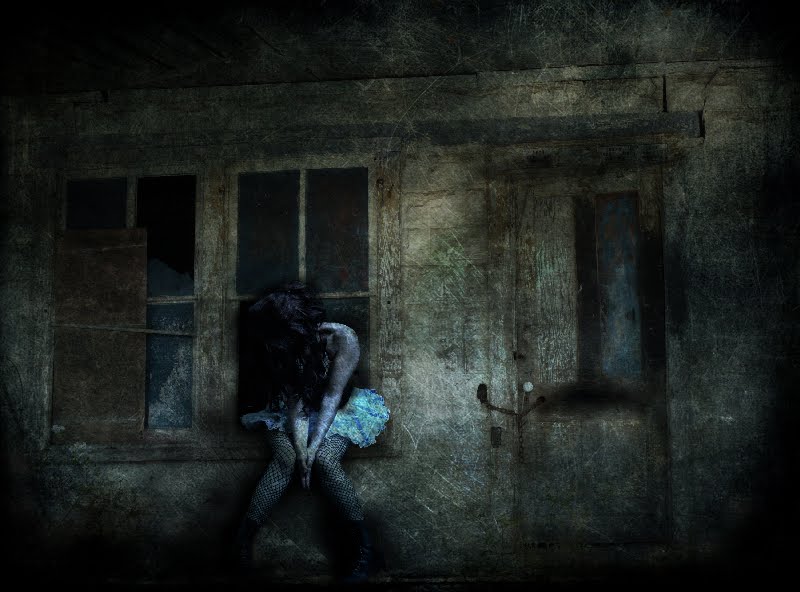


With that in mind, as an artist, I always live in constant curiosity about what exactly moves others to appreciate my dark art. I can think of nothing more exciting then when someone takes the time to tell me why they have fallen in love with an image I’ve created. Why they appreciate it? What is it that it’s communicating to them? Especially with the darker portraits, I would like to know, what parts of human beings become engaged when admiring images into which I’ve injected loneliness, hopelessness, sadness, etc.

Perhaps it takes a certain kind of personal strength to appreciate, and even find beauty in art that illustrates the aching of a human heart. Today, I personally extend my gratitude to all those who do, as it inspires me to express every aspect of my being in my art, no matter how dark I may feel at the time. Every part is worth listening to and expressing. Thank you to all those who have reconfirmed this to me through all your wonderful appreciations. May we continue to include everything in art, even pain. I would love to hear your views on this subject, if you care to share.


To read more of my reflections on Expressing Pain in Art click here

Tuesday, October 5, 2010

Art Auction for Cancer!


Art often takes intense emotional experiences and translates them into colors and shapes. An artist often does this intuitively. An artist’s creations can often serve as a diary of sorts through which they illustrate their inner, emotional landscape. What often fuels an artist’s emotional landscape are the people they love. Thus an artists creations can be closely connected to their loved ones: those who inspire us and touch our hearts unlike anyone else. But what happens when a loved one’s life is severely threatened? How does that color the work of the artist who loves them?


Today I would like to tell you a little secret about my artwork: It is greatly influenced by the love I feel for my little sister, who has been diagnosed with a serious, incurable illness. Lulu was just beginning to blossom into a career of modeling, music and dance, when the illness struck. It nearly took her life twice. I will never forget the night my mother called me from a hospital in Paris to tell me that Lulu’s condition was unstable. I could not entertain the thought of ever living without her. Not for a second! My sister and I have been very close our entire life and I love her so deeply.


Over time, I have watched my sister brave her illness and show an amazing strength and hope that greatly invigorate my own practice of gratitude in life. Lulu has been such an unshakable inspiration for me! She has motivated me in both my art and my life, which are very closely linked. Lulu’s spirit often shines through my images, as I focus on themes that are dear to us both. Although Lulu can no longer model, or dance, due to her illness, I attempt to keep this part of her alive by exhibiting it in my self-portraits. This is one reason I never show my face; so that Lulu can feel free to imagine herself in my artwork whenever she wishes to! I try to create worlds in my art that Lulu and I always dreamed of living in together. Worlds of music, and beauty, and magic!


I believe that it takes nearly mystical abilities to face life with a smile on a daily basis, while struggling with an incurable illness. Well, my sister Lulu is a true mystic, because this is what she does! She has been a tremendous influence and inspiration for me in my life. For this reason, I was especially touched when my friend, artist Jared Knight, informed me that his sister, Tamara, had also been a huge inspiration to him, and that she also suffered from an incurable illness. Jared then invited me to donate one of our artistic collaborations for a cure for cancer! What a wonderful idea! So we did!


We decided to wait until this month of October, as it’s International Breast Cancer Awareness month, to launch our art auction. The colorful art piece, entitled “Hope”, is on auction for ten days only on Ebay, sponsored by the

Susan G. Komen for The Cure Foundation . I excitedly invite all of you to visit it! Here is a video Jared made which tells all about it. I feel so very privileged to be able to participate in projects like this one, as they celebrate people like Lulu and Tamara, and all those whose beautiful spirits triumph over incurable illnesses, fueling the work of artists like Jared and I. Thank you for your inspiration!

Tuesday, September 14, 2010

Honoring the Female Form in Art


Throughout the ages and across cultures art has been inundated with depictions of the nude female form. From stone age sculptures of fertility goddesses to Sandro Botticelli’s Birth of Venus, all the way into twentieth century photographers like Julian Mandel, femininity has been a powerful theme that has consistently inspired creativity in artists. But what is considered a respectful artistic presentation of a woman, and what is considered an offensive one? I believe that there are as many answers to that question as there are people on the planet! This is because the way we each interpret art is so very unique. The diverse reactions people have to nude females in art never ceases to amaze me! What one culture may consider a most sacred depiction of the goddess, another culture may call indecent and exploitive. Is the nudity itself a cause for shame?


I grew up on a hill overlooking the sea. A short walk through a canyon behind our home led down to a nude beach, which I frequented as a teenager. I was introduced to nude sunbathing by my aunt when I was a young girl. My aunt was also a student of photography who created beautiful nude self-portraits. My mother, however, though a lover of art, became visibly uncomfortable around nudity.


For some, the depiction of a nude, or semi-nude female, seems to elicit a type of nervousness. Even if the female is presented outside of a sexual context, her mere nudity seems to trigger discomfort in certain audiences, perhaps stemming from fear that such exposure of the female form might be exploitive of women, or encouraging of such exploitation. Others cheer at the sight of the same work of art, because they see it as countering the exploitation of women! And then we find the multitude of varying views that rest between those two extremes.


As an artist who engages her own female form in her artwork, I can personally attest to the wide variety of reactions observers have to art which focuses on femininity. It swiftly becomes obvious to me how reacting to a work of art is a very personal experience indeed, into which we each import our own individual sets of beliefs, cultural influences, conditionings, emotional associations, etc. Is it, therefore, the role of the artist to anticipate how others will react to their work and share their work accordingly? I don’t believe anyone can predict with 100% accuracy how another person will react to their art. How do we know if our artistic creations will become objects of admiration or scorn? We can never really know until we share them. I will always give great value to uninhibitedly sharing art.


In sharing art and receiving feedback, I believe an artist can potentially learn as much about his or her own works of art, as they can about their audience. If a person is offended by the way a woman is depicted in art, that might give us more insight into the offended viewer than into the work of art itself. It opens up a dialogue that could hold potential meaning. Maybe it assists the viewer in coming in touch with why they hold particular perspectives. Does an artist still create art in the knowledge that it may offend the perspectives of others? As the nude female form continues to grace works of art today with as much zeal as it did in the past, we can surmise that history tells us that they do. Artists create whatever art they are inspired to! So what responsibility does an artist have to their audience?


To me, an artist’s responsibility lies in being loyal to their own artistic visions and inspirations regardless of what reactions they may elicit from others. When it comes to making an artistic contribution to the ever growing celebration of feminine beauty and sensuality in art, it appears that the only prerequisite is the artist’s sincere eagerness to do so. I have been reflecting on this, as I embark on my first artistic collaboration with my very thoughtful friend and colleague, photographer Michael Messina, with whom I have been pondering the age-old inspiration of presenting the female form in art. May the feminine always be honored in art without restrictions or shame.

Monday, September 6, 2010

Lost and Found in Art

I think I engage my art as a means to finding parts of myself that had become lost, or temporarily misplaced, or forgotten about. Maybe they are parts of myself that were alive when I was a child, and then lost their vitality somewhere between growing pains and adulthood. Maybe they are parts of me that were suffocated by challenging circumstances or relationships. Maybe they are just new sides of me that spontaneously appeared as a result of expressing myself through art, and are looking for their first outlet. Or maybe they are old parts that are being resuscitated, and the photograph is acting as a medic, bringing them back to life.


In creating a photograph I feel as if I am creating a safe space in which to express myself as freely as I’d like to. It is an arena into which any parts of my being can feel welcomed into, and find a voice. Yes, my photographs are like my voice! It is a voice that has a lot to say, and is grateful for the opportunity to do that that through my art. I am most grateful, also, for those who hear my voice; those encouraging others who have appreciated my photography and thus inspired me to create more. This is especially meaningful to me, as I contrast it to times in my life in which I did not feel the expression of my voice was that supported. Through making and sharing a photograph, my voice is found, my voice is expressed, and it is heard. We all need to feel heard in life.


To me, sharing art is a way in which human beings openly hear each another. Existentialist philosopher, Paul Tillich once wrote that “the first duty of love is to listen”. I believe that in creating and sharing art, we come in touch with the parts of our selves, and others, that are most desirous of participating in a loving relationship. At least for myself, I experience the creating of a photograph as my traversing a path that aims at reaching my very core. I believe everyone’s core is love.


Maybe I engage my art to explore this belief that we are all made of love. To reach a part of myself that is unshakable. In attempting to do so, I inevitably encounter other parts of me that aren’t as solid: fleeting emotions, changing perspectives, temporary wounds. And I offer each and every one of them a release through the images I create. Once expressed, I find they are much more peaceful, and move out of the way so I can connect with something deeper. It is almost as if some parts of me need to be lost, so that others can be found.


In a single photo session then, I can potentially both loose and find myself. Sometimes over and over again. This is the creative process I am so addicted to! And what I find when making art is truly unlimited! I think this holds true for every artist: our creations are like doorways that open into an endless world of discoveries. Perhaps we just need to remember to loosen our holds on those parts of us that relate to limits, so that we can experience the boundlessness before us, each time we make art. In this context loosing takes on a positive meaning. As Henry David Thoreau once wrote: “Not until we are lost do we begin to understand ourselves.” It is this deeper understanding of self that I find each time I lose myself in my art.


Wednesday, September 1, 2010

Hearing a Painting or Photograph?


What does it mean when a painting or photograph speaks to us? It is a common expression engaged in the English language that indicates when something impacts us in a deep and meaningful way. When a person tells me that a photographic creation of mine has spoken to them, I take it as a great compliment! The expression itself suggests that one’s experience of a visual work of art was so overwhelming that it seems to have engaged all their senses, and not merely the sense of sight.


What does it mean then to hear a photograph, or a painting? I think it means that one’s perception of it is so profound, it deepens the ways we interact with it, moving us beyond the visual and into subtle auditory, and emotional levels. When we see a dramatic image of a waterfall, it might trigger sonorous memories of what a waterfall sounds like. Suddenly, we are not only seeing the waterfall we are hearing it as well. Or a pastoral scene of flowers and trees rouses the melodies of bird calls in our mind, the reflected trees in the ripples of a lake cause us to hear their leaves rustling in the wind. This happens to me quite often!


Visual stimulation is so potent, it can instantly act as a key to a variety of sensations within us. It is interesting to note, however, that the expression which describes a meaningful connection with a visual work of art includes, (of all senses) the sense of sound! When a photograph or painting speaks to us, it is understood that it has really moved us and touched our hearts. I think this might speak to the fact (no pun intended), that sounds greatly intensify our experience of art. As when we watch a film with the mute button on, it tends not to have as great an impact on us. Sounds certainly add a whole other dimension! When the sounds are not externally provided, the audience will often add them, in a most spontaneous, nearly unconscious manner, and suddenly, a photograph is being heard, in addition to being seen!


So what does art say to us? What does a painting, or photograph sound like? There are, of course, as many responses to these questions as there are humans on this planet! When the sounds are internally generated, they are as varied as our DNA stands! I most enjoy when others give me feedback, and translate for me the specific ways in which my photographs speak to them. Perhaps nothing could be more enjoyable to an artist than to hear about how their work has moved the hearts of others. I aim to move hearts with my art, and create photographs that not only speak, but sing!


Tuesday, August 24, 2010

Eastern Lure


Today I feel the fullness of the moon beckoning me into making more art! It's almost as if I can feel it pulling me into energetically creative spaces, and asking me to express myself artistically. The way the full moon affects my creativity is as clear to me as the way it affects the ocean's tides. It is an experience I share with other artists, and one that has been written about since antiquity. Eastern cultures especially have held a fascination with celestial bodies and the belief that their movements in the skies directly affect human behavior. This was but one of the many perspectives offered by the East that resonated with me as a little girl. But I think, more than anything it was photographs of life in the East that spoke to my sense of self the loudest.

Lotus flowers, women veiled in vibrant colors, ankle bells, decorative henna, exotic goddesses with many arms! I was first introduced to this enticing imagery from the east as a child while turning the pages of National Geographic magazine. Even though I had been raised in America, such scenes drew me in with curious familiarity. I wished to jump into the photographs and be them! I felt spontaneously and strongly emotionally wrapped up in them.


My art has always originated with an emotionally rich place within me. I need to feel my art before I express it, translating those feelings into images. Recently my art has reflected the spell eastern cultures have cast over me throughout my life. From tales of Arabian princesses to those of Indian mystics, my last series of self portraits has begun to reflect the ongoing romance I’ve held with the east. It has been a very enduring, passionate one indeed! And it has spoken to my heart in deeply informative and even comforting ways. I offer you this first series for your viewing pleasure:


Sunday, July 4, 2010

Supporting Artistic Freedom


Countries which encourage and support artistic expression have my great appreciation, as it is my belief that humans best thrive in environments in which the arts are allowed to flourish. The arts are the universal language which communicates to every human heart, inspires individual creativity and breathes life into healthy communities. How a group of people relates to the arts reflects a lot about the collected consciousness of that group: their values, their sensitivity, their courage to relate to one another on deep levels.


The largest art festival in the world is held every summer in Scotland’s capital city, Edinburgh. Established in 1947, this festival aims at creating a nurturing a supportive environment in which artists can express themselves, and have the opportunity to share their visions with large audiences. The Fringe, as it is called, has been reproduced in other countries around the world, including the United States of America.


Today, Americans celebrate their independence and freedom. These are values upon which all artists rely: the independence and freedom to express ourselves creatively, wherever we live on the planet. As former American President John F. Kennedy stated, "I see little of more importance to the future of our country and of civilization than full recognition of the place of the artist. If art is to nourish the roots of our culture, society must set the artist free to follow his/her vision wherever it takes him/her."


On this day in which freedom is celebrated, I feel honored to have been invited by American director John C. Bailey, to contribute several of my artistic photographs to the Capital Fringe Festival (an offshoot of the Edinburg festival), held annually in Washington DC. I am especially thrilled to participate, as the images I’ve created will be engaged in illustrating a controversial theme which has occupied artists throughout the ages: that of suicide. It is a timeless tragedy that many avoid addressing, and that gets beautifully and compassionately presented in Evan Crump's creative play, Genesis as directed by John C. Bailey.


The role of the artist then, often becomes that of the communicator of uncomfortable, taboo subjects. The artist creates an acceptable, approachable setting in which the audience can safely examine these subjects, and experience their own hearts entering into valuable dialogue with them. As the famous classical composer Robert Schumann so aptly put it, "The artist's vocation is to send light into the human heart."


Effective art touches our heart then, and familiarizes us with its contents. Groups of people who thus support artists are inadvertently giving to their own hearts. This is, in essence what John C. Baileys’ play is designed to do, and I feel privileged that he chose my art to illustrate it, for "Every great work of art has two faces, one toward his/her own time, and one toward eternity." --Daniel Barenboim


For more information on the Capital Fringe Festival please click here